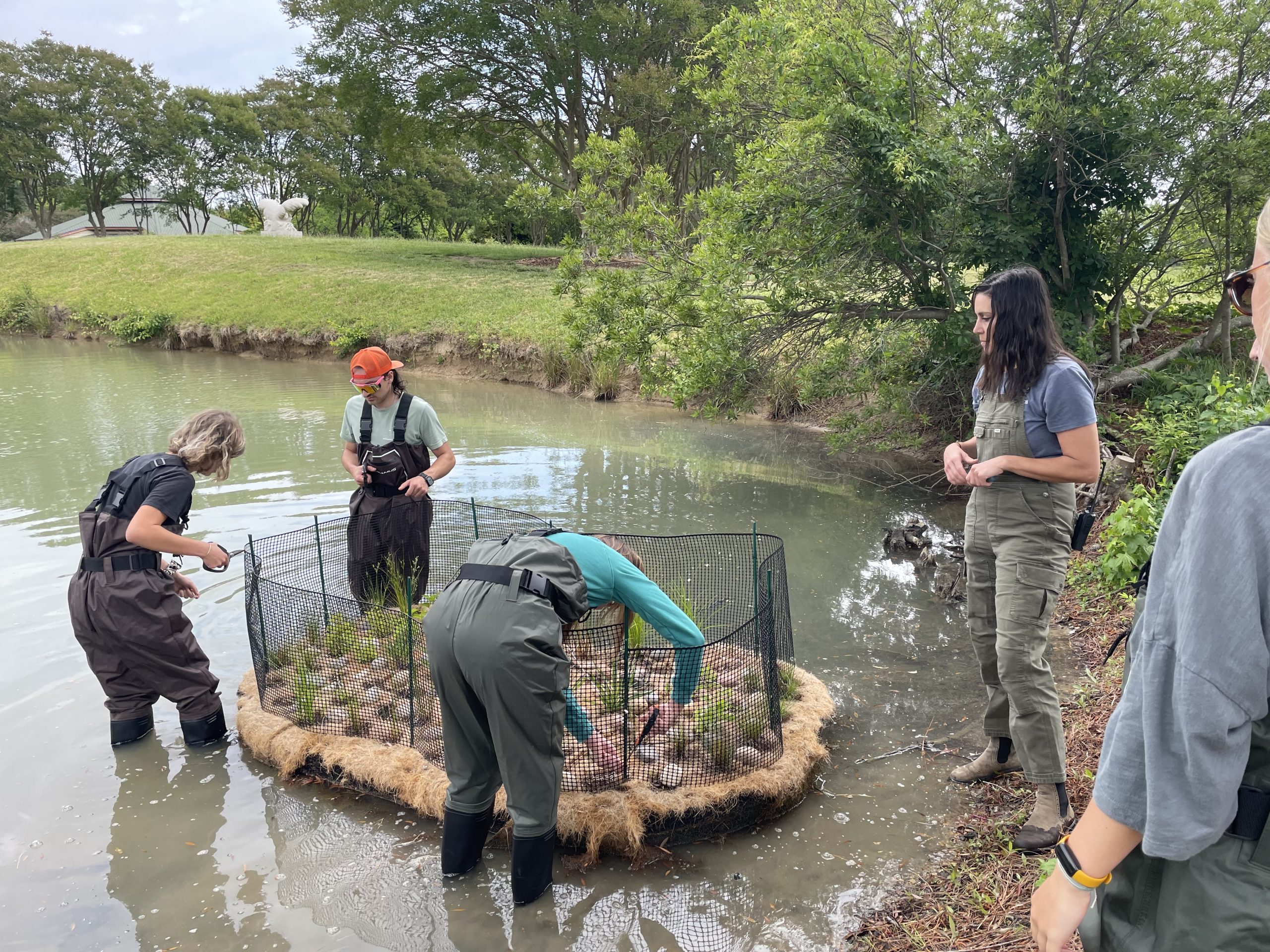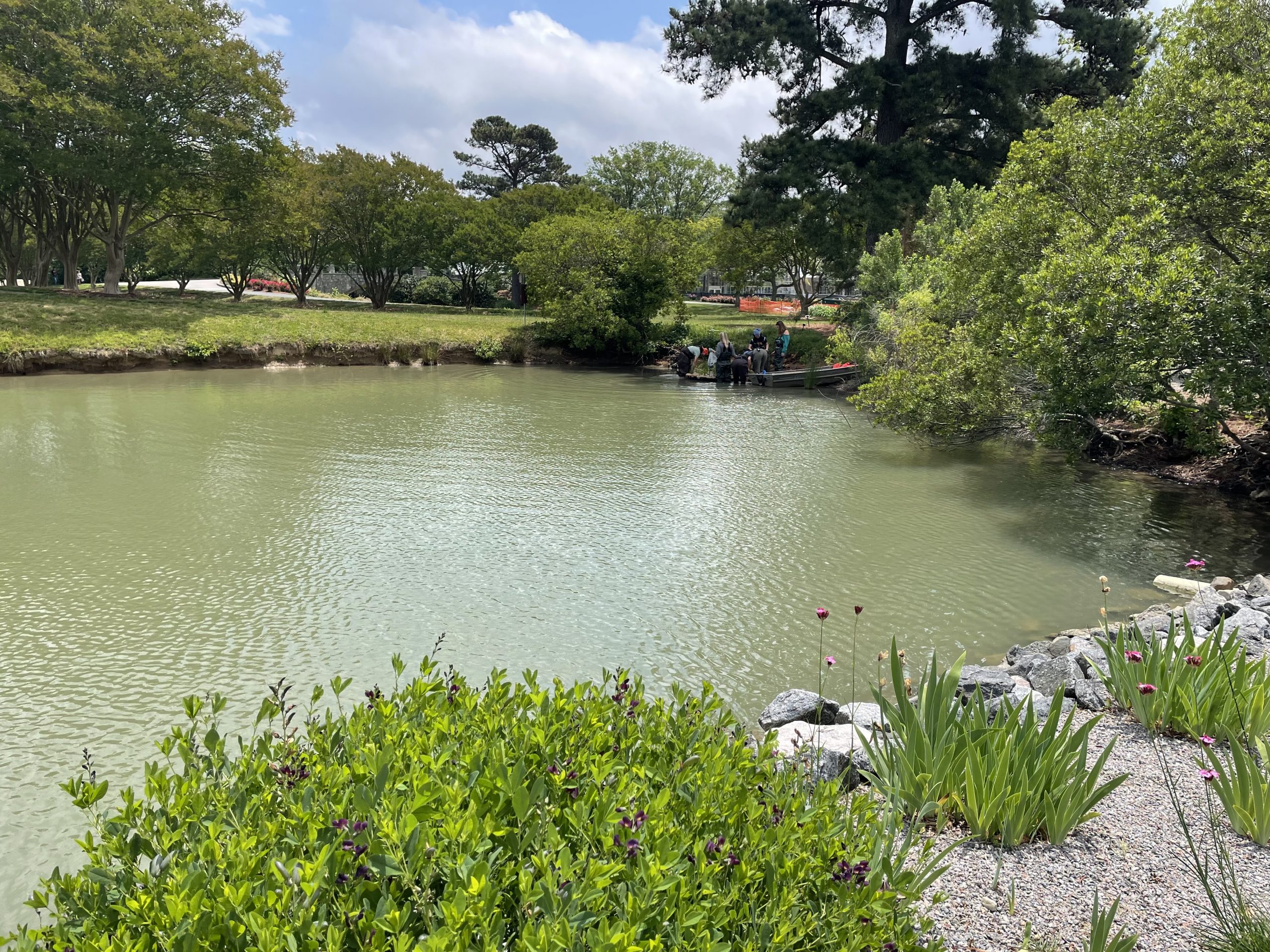
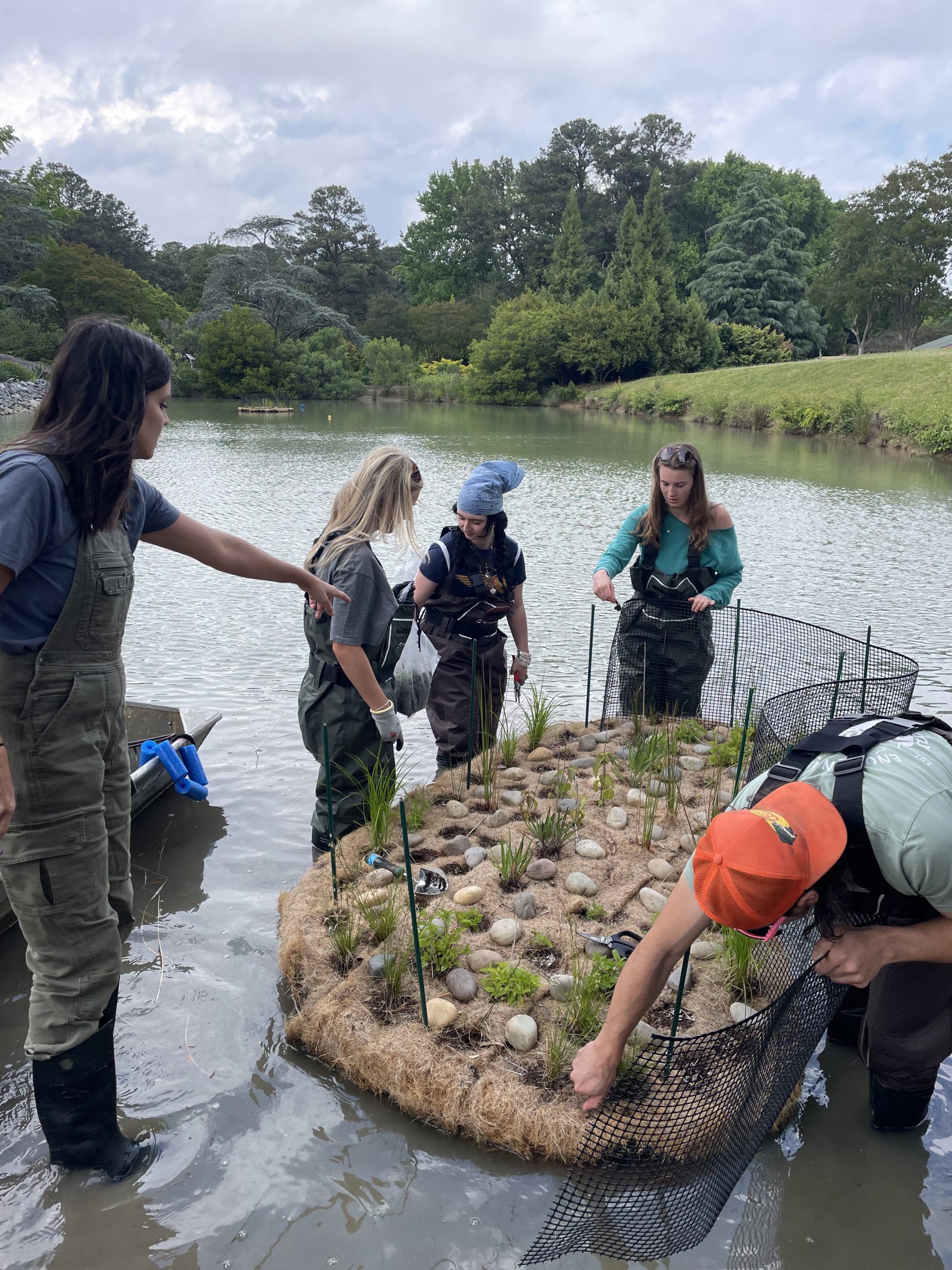
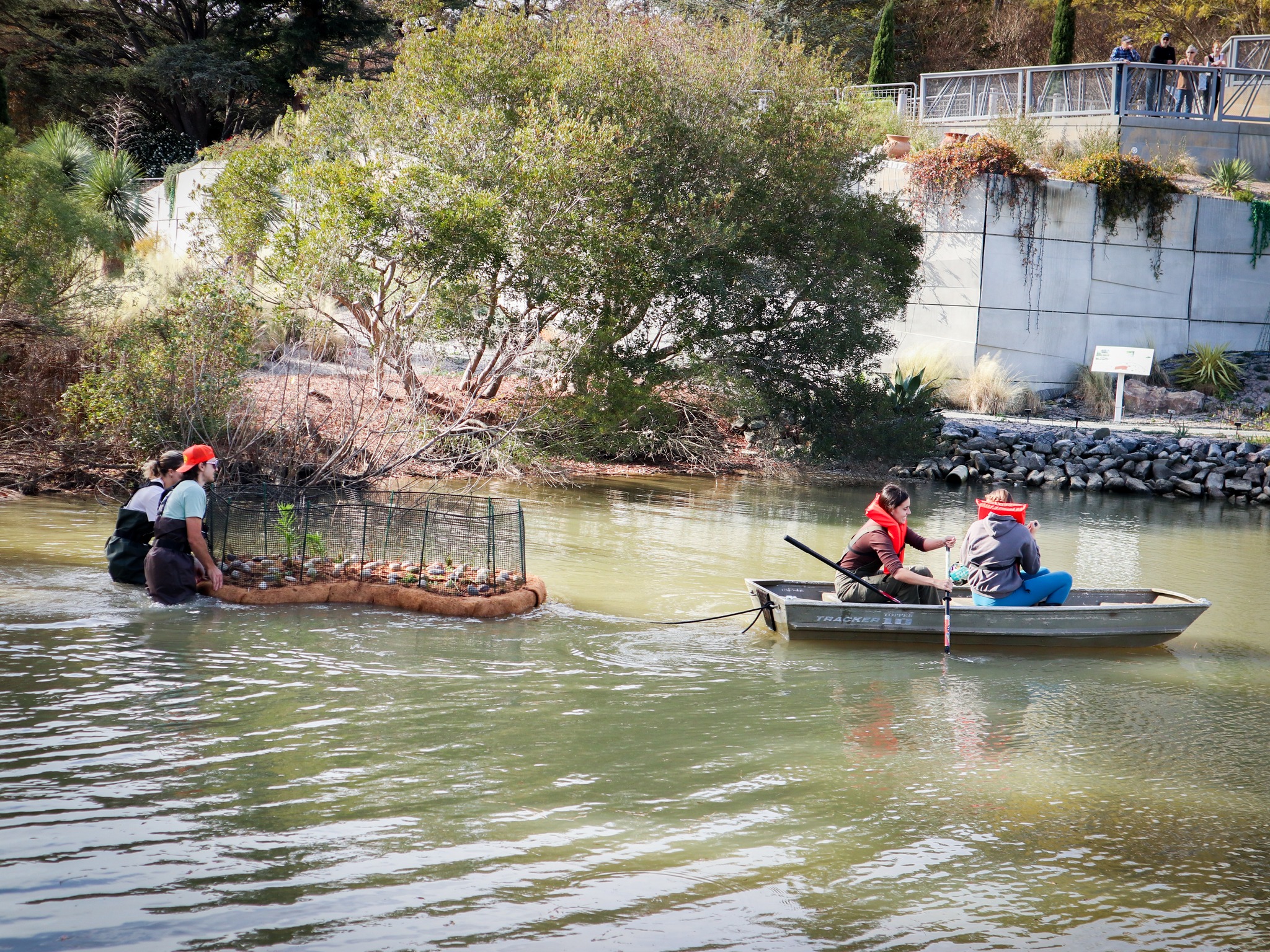
The three floating wetlands in the NATO pond will improve water quality, attract more wildlife and beautify the area.
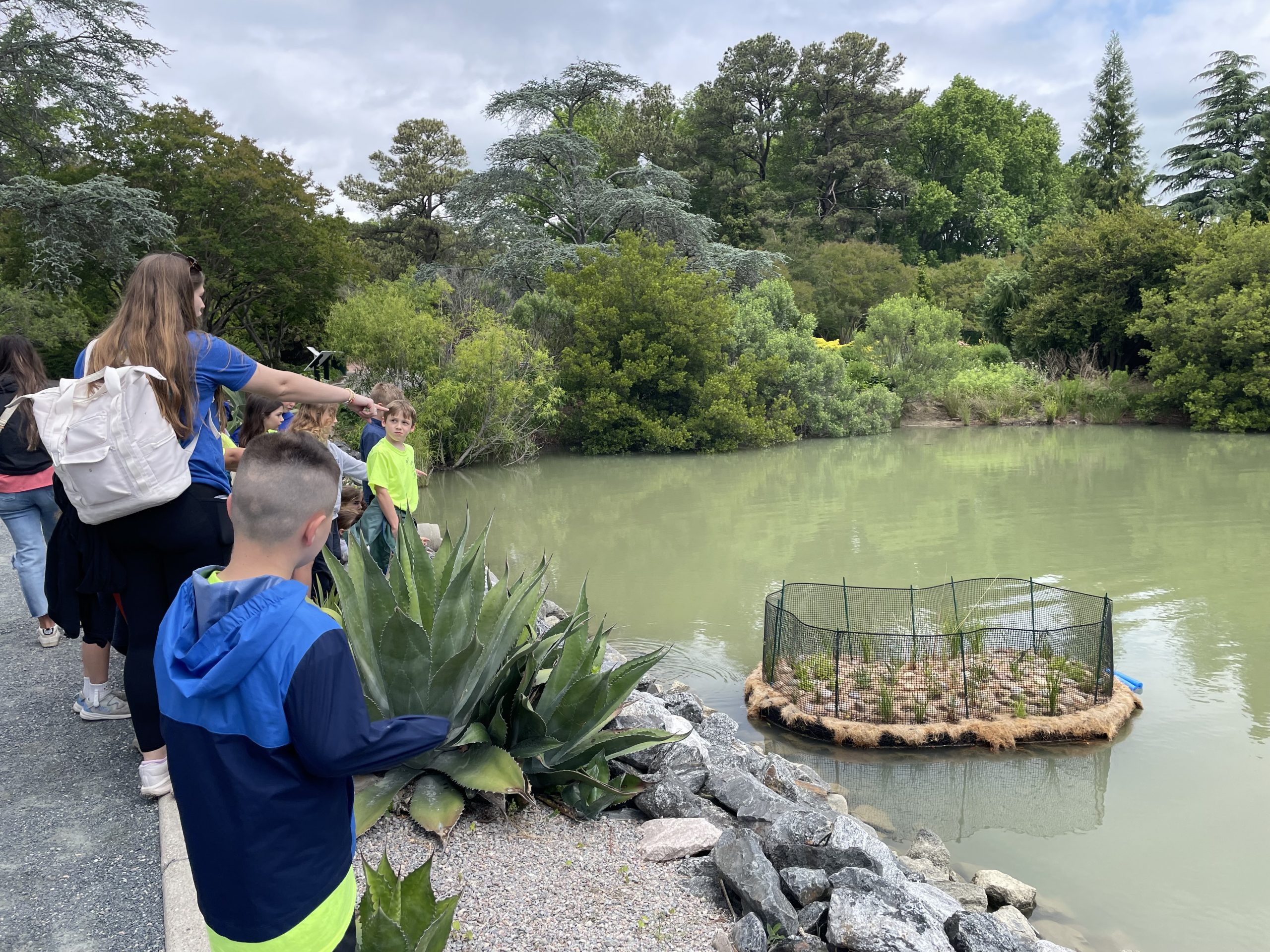
Something new is floating in the NATO pond at Norfolk Botanical Garden.
Local resident Linda Huddleston toured the garden recently with her grandson Everest Hill, who was visiting from Thailand.
The pair noticed a group of people standing in the water near the pond’s bank wearing knee-high boots and overalls, surrounding some interesting floating structures.
“What’s going on here?” she asked.
They learned about the “Floating Futures” project, an innovative partnership between VBCPS and the garden that combines ecology, engineering and education.
Five VBCPS seniors – students in the Environmental Studies program – were putting the finishing touches on three floating wetlands.
During the school year they travelled twice a week to the garden as part of their internship.
The garden’s senior director of adult education and conservation, Alex Cantwell, applauded the group’s efforts.
“They drew up the plans, picked the plants and after approval, put it together,” she said.
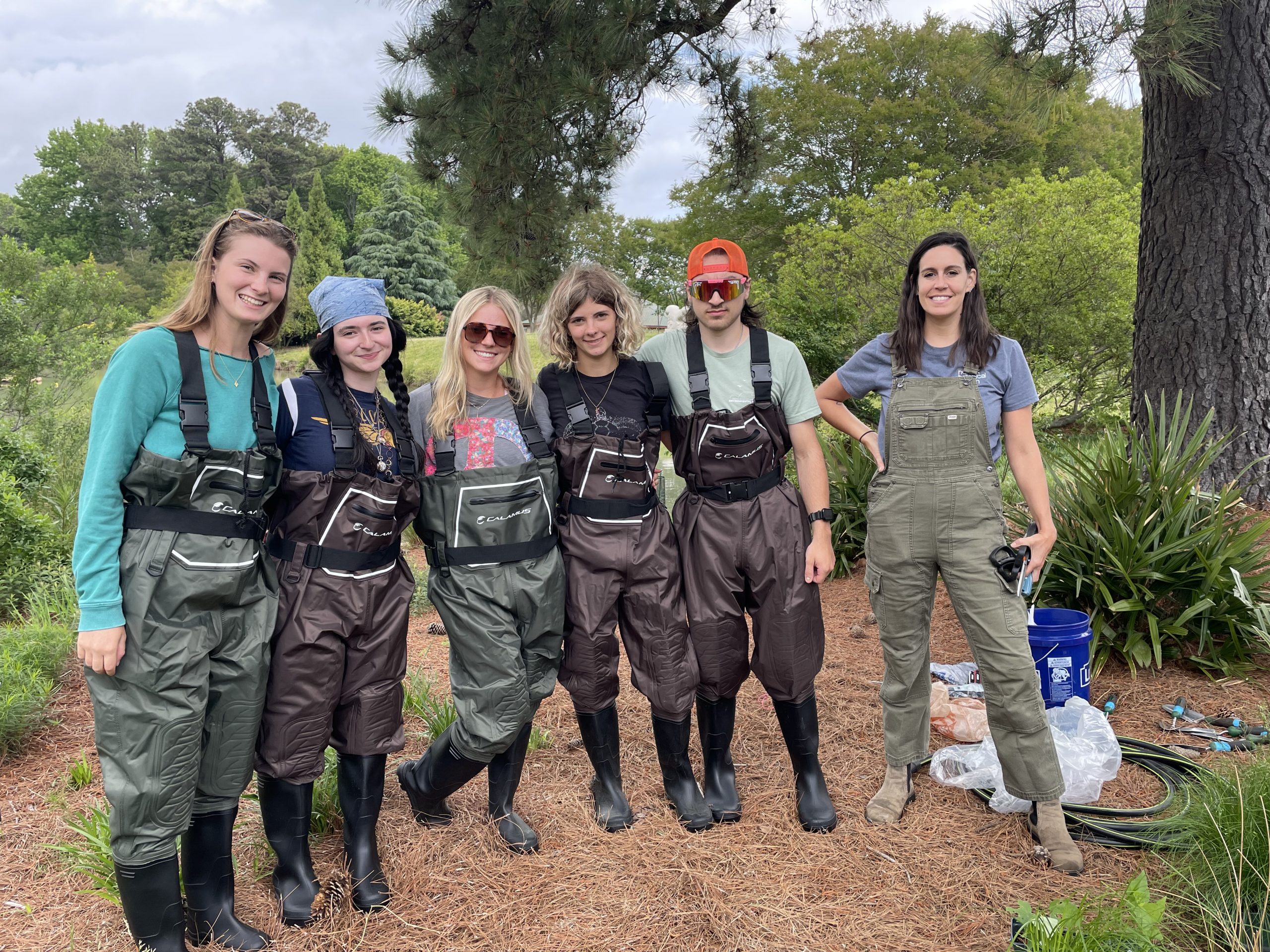
All are certified as Chesapeake Bay landscape professionals. They put their knowledge to the test by planning and designing the kidney bean-shaped miniature ecosystems for the freshwater pond named after the military alliance headquartered in Norfolk.
Each wetland is filled with native perennial plants, including milkweed, hibiscus, swamp sunflowers, and wetland-adapted plants called rushes and sedges. All were planted in nutritional peat moss and fencing was placed on the outside of the structure to ensure the roots spread before turtles and other wildlife decided to hop aboard.
Cantwell explained that the roots of the plants will extend into the water to filter pollutants, improve oxygen levels and create new habitats for the pond’s wildlife.
In fact, more plants made it through the winter than anticipated.
A variety of wildlife is expected to visit the new habitats, including otters, ducks, herons, raccoons, frogs and more. Flowers will bloom, and caterpillars will likely feed on the milkweed before transitioning into butterflies.
The project, made possible by a grant from the Hampton Roads Community Foundation, shows how plants can heal the waterways, Cantwell said.
“The NATO Pond needed some TLC and I thought it would be a really cool location for a project,” she said.
Intern Samantha Harris said she enjoyed working on the effort that not only will improve water quality but add beauty to the environment.
“I’ve always been into plants and this internship inspired me,” she said.
They also heard presentations on a variety of topics, including agriculture, growing orchids, identifying trees and more.
She and fellow interns Aaralynn Malikian, McKenna Townsley, Madelynn Dobbins and Gabriel Faria all plan to attend college in the fall to study fields related to their interest in the environment.
Plants and flowers are beginning to emerge on the islands in the NATO pond, just in time for summer visitors to see the results of students’ efforts to support healthier ecosystems.
The Chronolog station at the NATO Tower overlooking the pond allows guests to take photos and document the floating wetlands’ growth over time.
Cantwell said it’s important to cultivate the next generation of environmental stewards and prove that with creativity and care, even a small project can inspire change.
Next year’s Environmental Studies interns will help sustain the structures.
Environmental Studies Program Coordinator Chris Freeman said the internship experience connects students with working professionals in potential career paths.
Many of those relationships continue beyond graduation, he said.
In addition to forestry, horticulture and resource management, the program offers internships in the areas of ocean and marine biology, architecture and engineering, water quality and environmental conservation, ecotourism and environmental entrepreneurship, and policy and law.
“These internships are critical for students to get hands-on experience, exploring the vast array of environmental career paths across our region,” Freeman said.
For more information: https://envstudies.vbschools.com/our-school/our-program