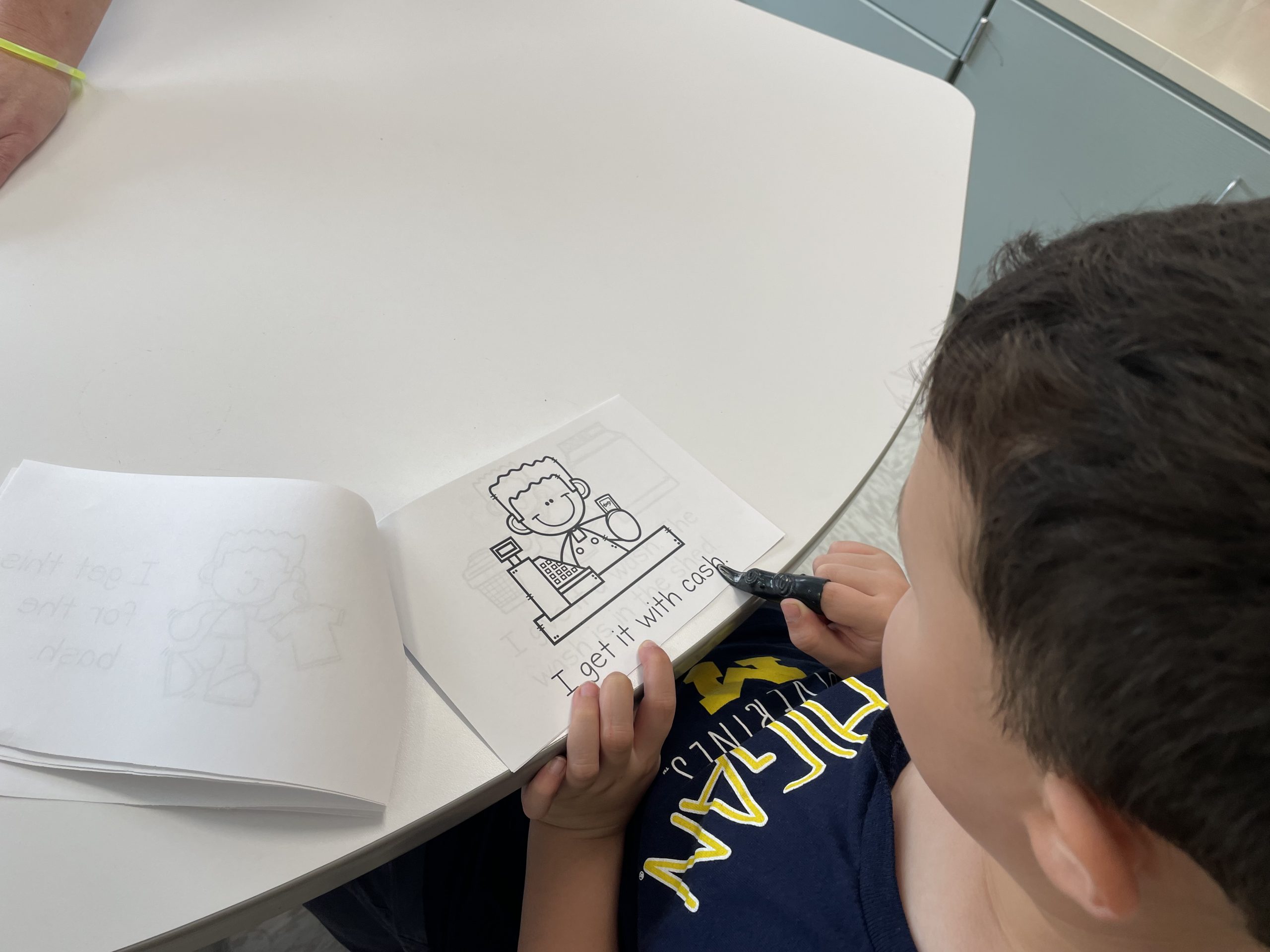
Maya Schmitt is proud.
“I can read and I know all my letters,” said the Kempsville Meadows Elementary kindergartener.
“They make more than one sound,” she added.
Maya and other VBCPS kindergarteners’ reading skills are improving, thanks to consistent instruction based on reading science implemented in the classroom.
Teachers and assistants are both included in ongoing professional development, with this year’s training having a specific focus on literacy instruction provided by the Department of Teaching and Learning.
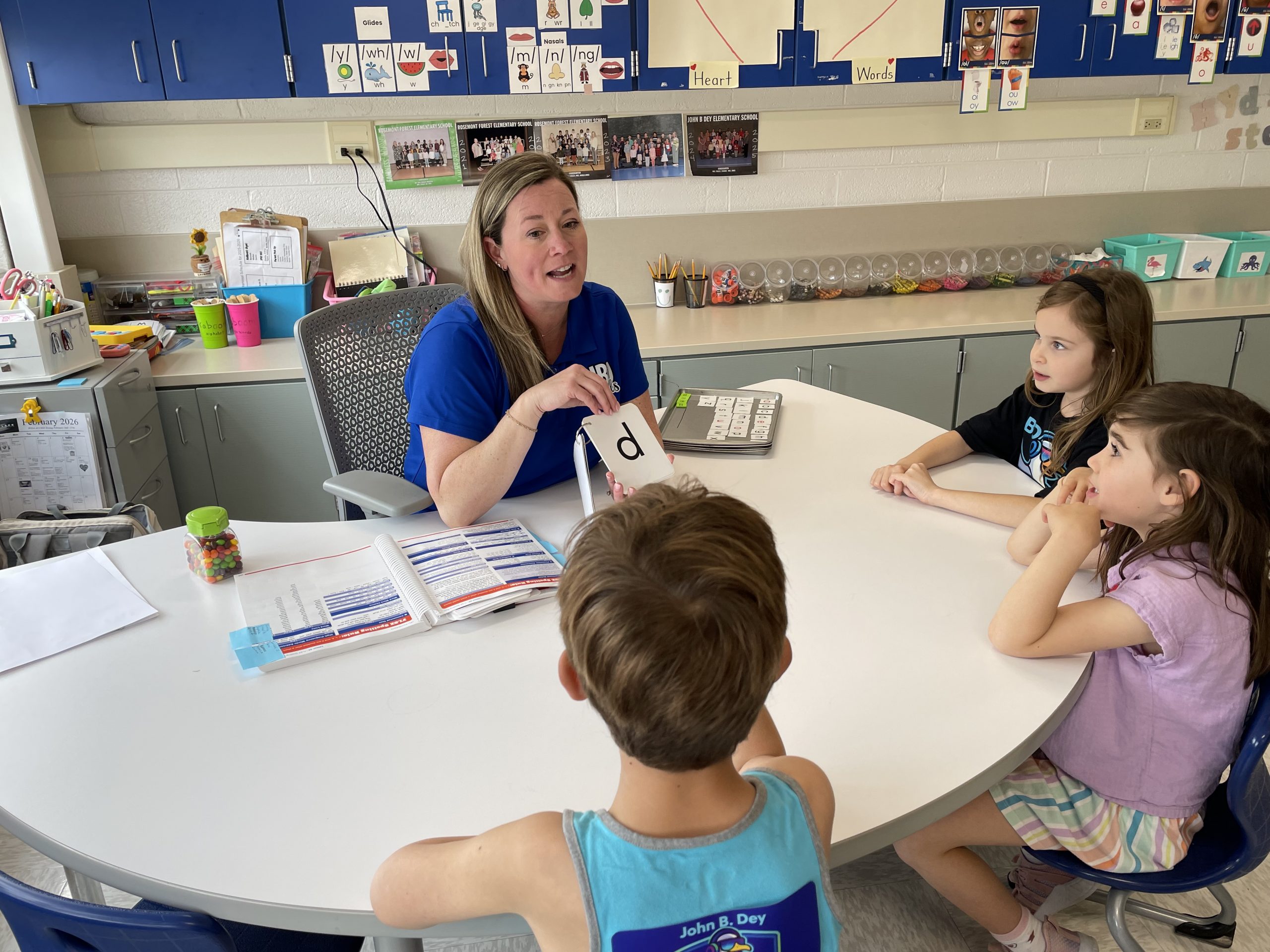
John B. Dey principal Greg Furlich said the collaboration between teachers and assistants means kindergarteners of varying abilities learn to read.
“We can get more kids more individualized attention more often during the day, and we are really beginning to see results from it,” he said.
Students are divided into small groups to meet their needs based on specific testing data. They participate in hands-on literary activities depending on reading levels.
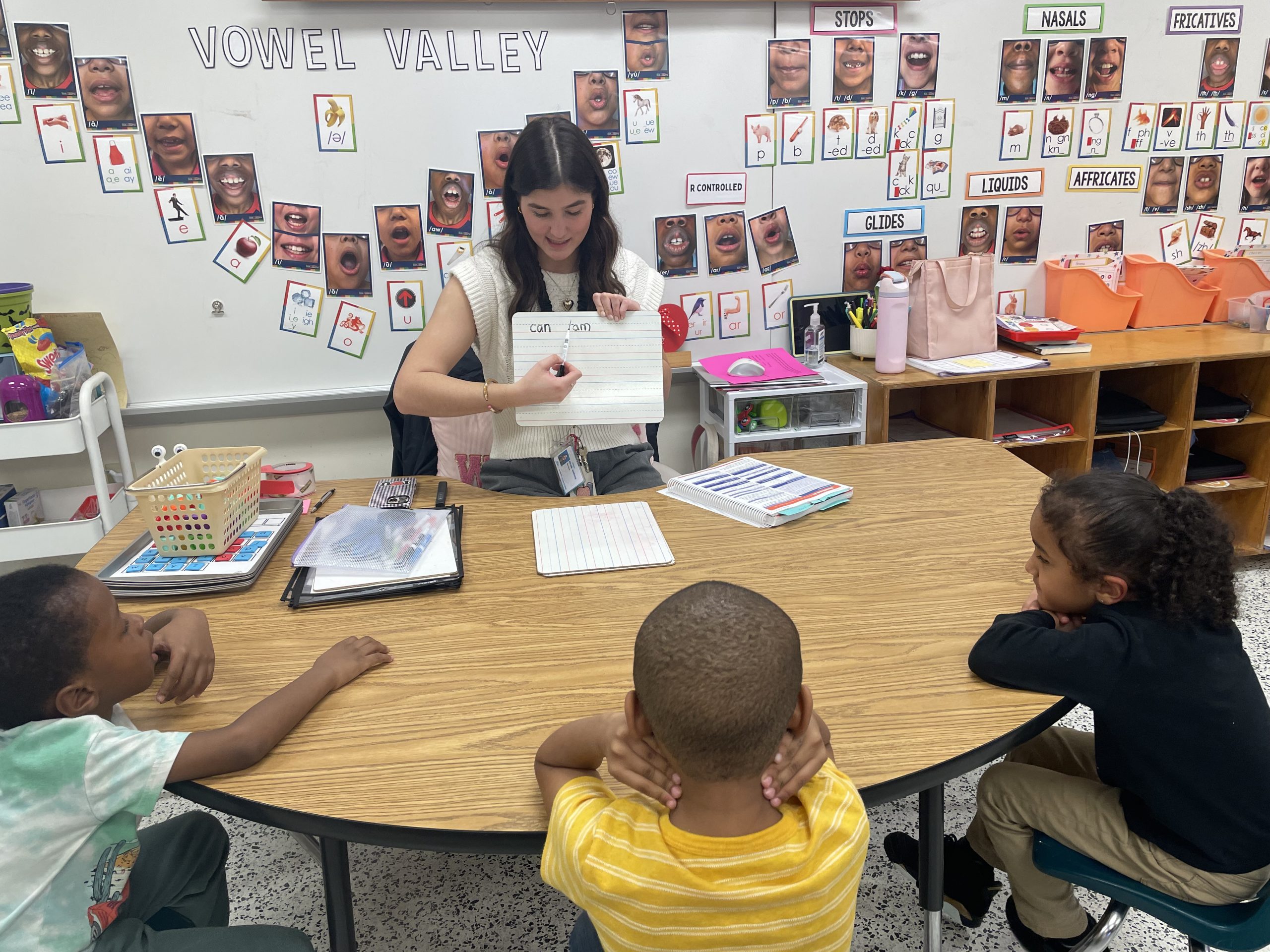
Working in small groups allows more one-on-one help for auditory drills, building sentences and emphasizing phonetics, including blending words apart and working on sounds, said John B. Dey kindergarten teacher Casey Tinsley.
“We are reaching that reading phase more quickly,” she added.
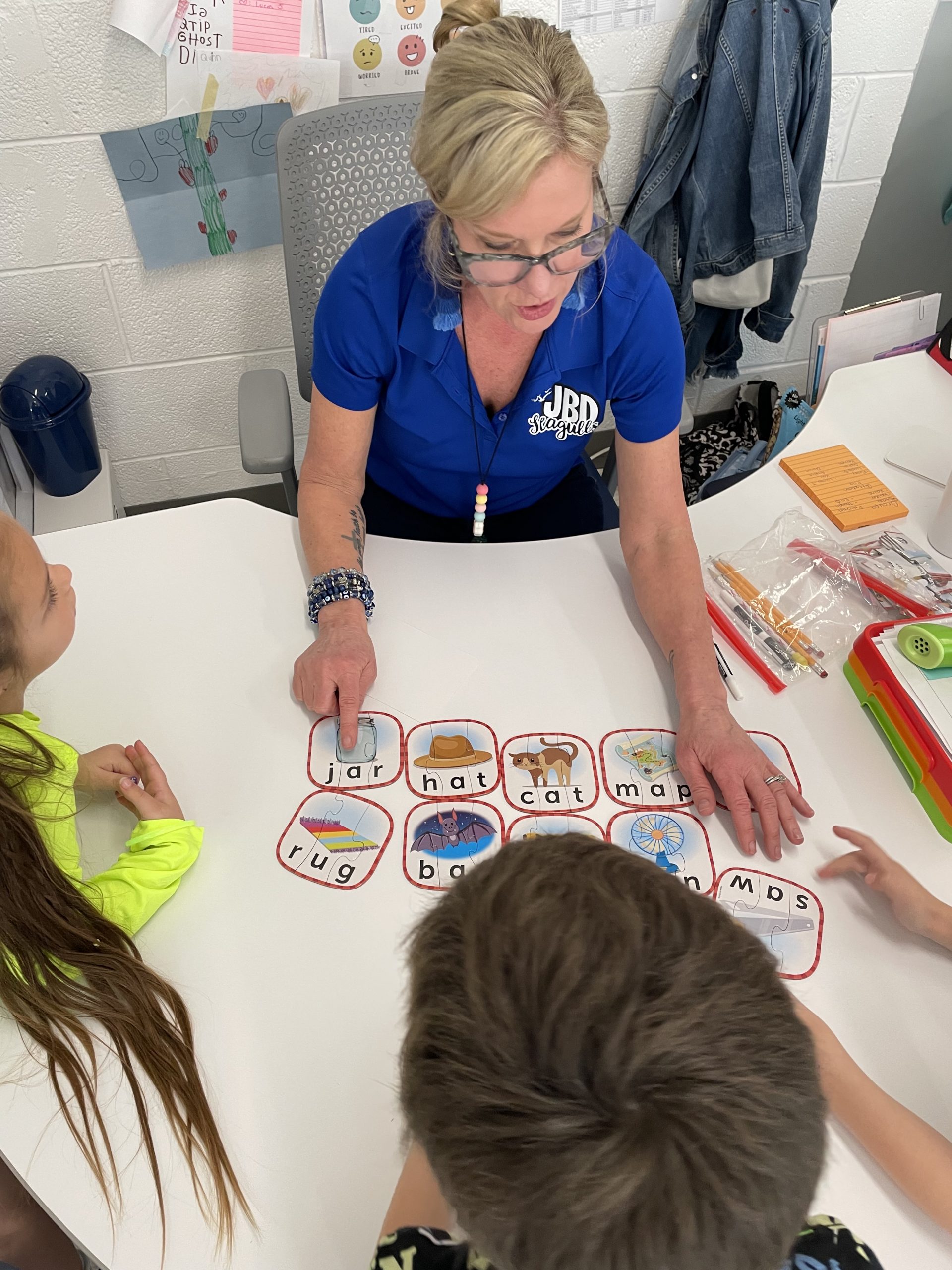
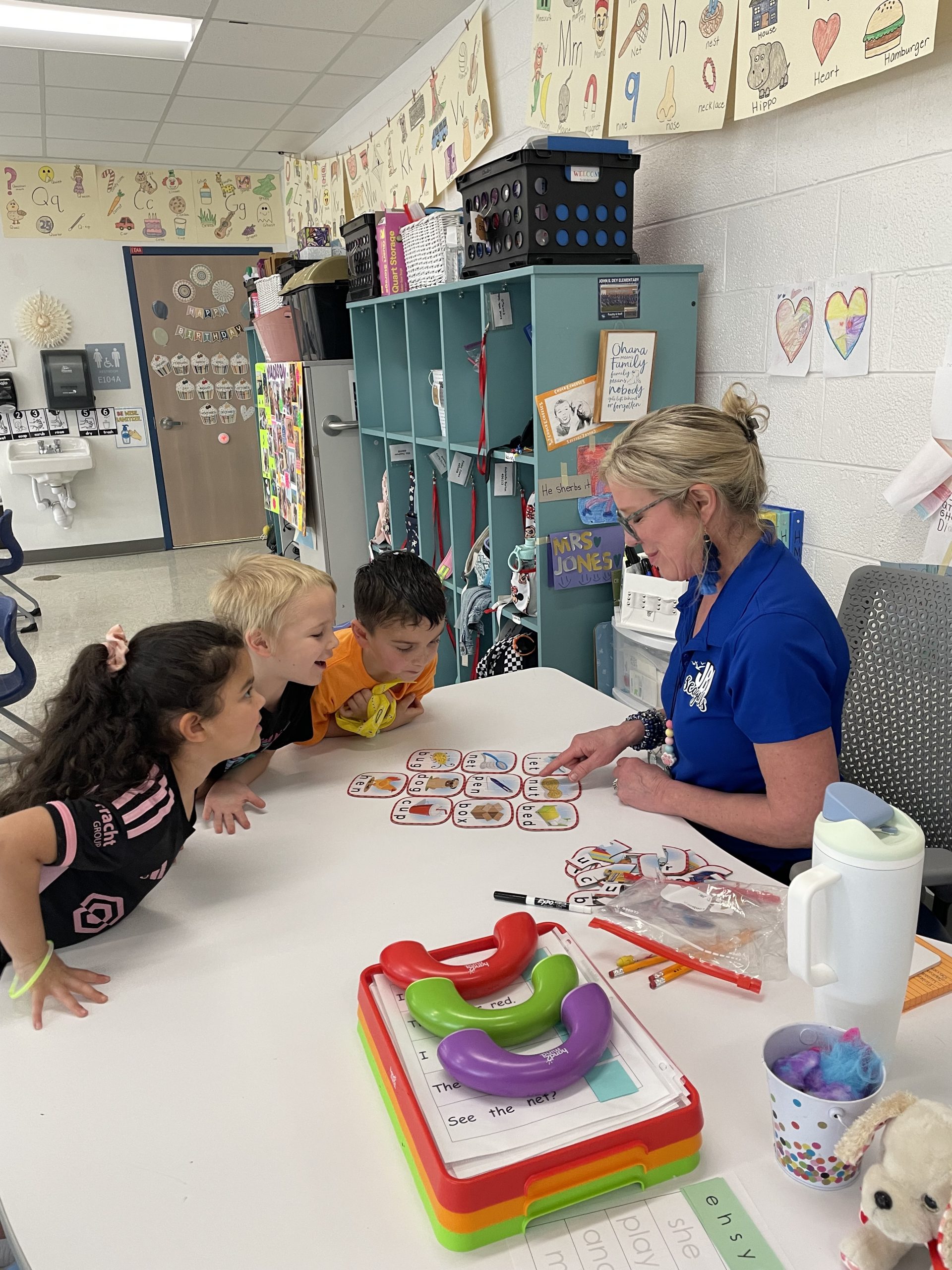
This year each of the school division’s 54 elementary schools’ kindergarten classrooms received new literary kits, including a dry erase board, letter tiles, puzzles, and phoneme phones.
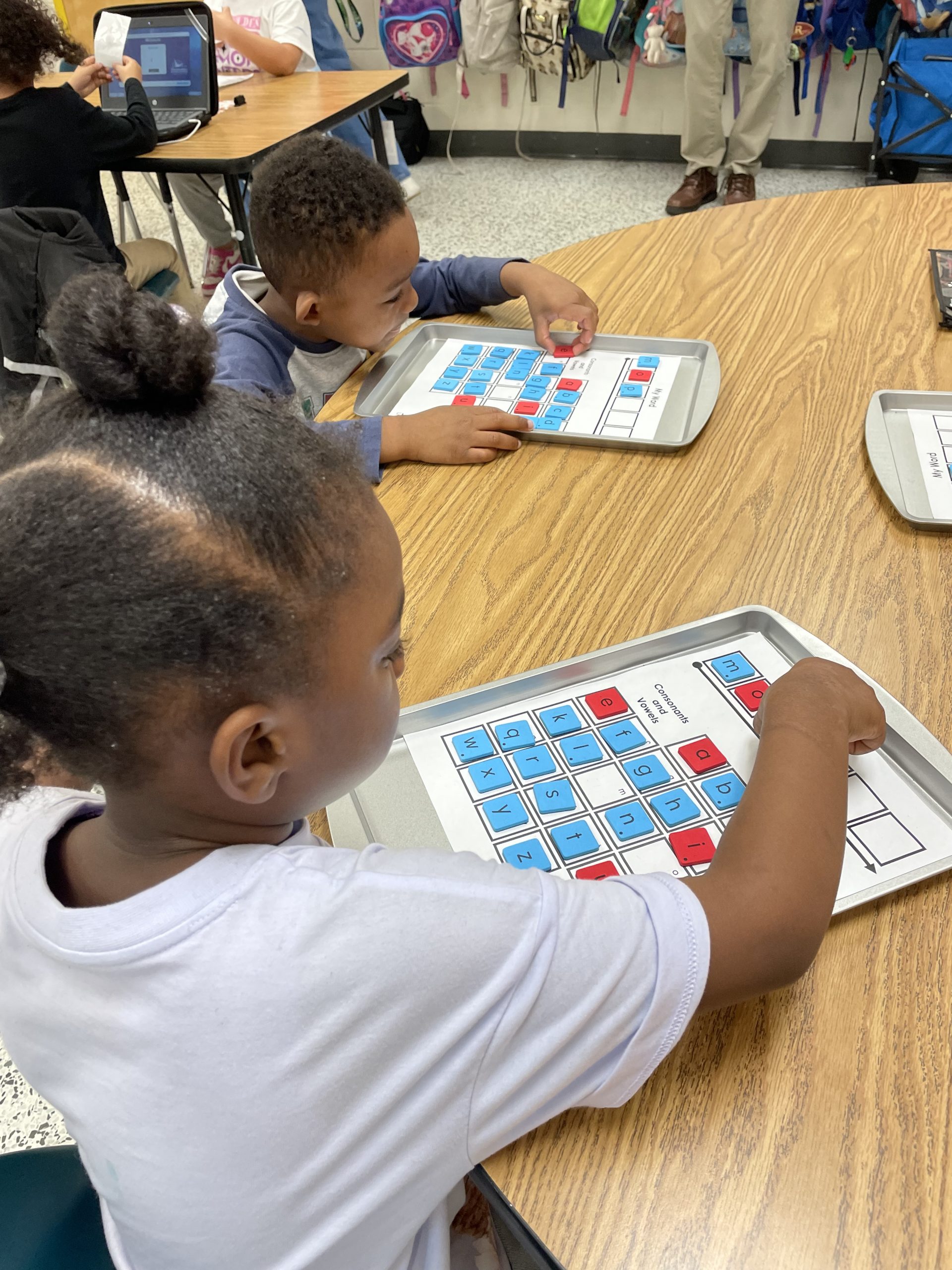
Kempsville Meadows kindergarten teacher Nicole Anthony recently asked a small group to use the red vowel and blue consonant tiles to build words. They sounded them out letter by letter, such as “m”, “o,” “p.” She reminded them that “every word has to have a vowel.”
Assistant teacher Amanda Lauersdorf worked with several others. She held up a picture of an igloo and asked students to sound out the beginning of the word.
“/ĭ/, /ĭ/, /ĭ/,” they chanted.
Next up was a picture of a goat. “/g/, /g/, /g/!” they exclaimed.
They nodded “yes” after Lauersdorf asked if they felt the vibration in their throats when they sounded out the first letter of the word.
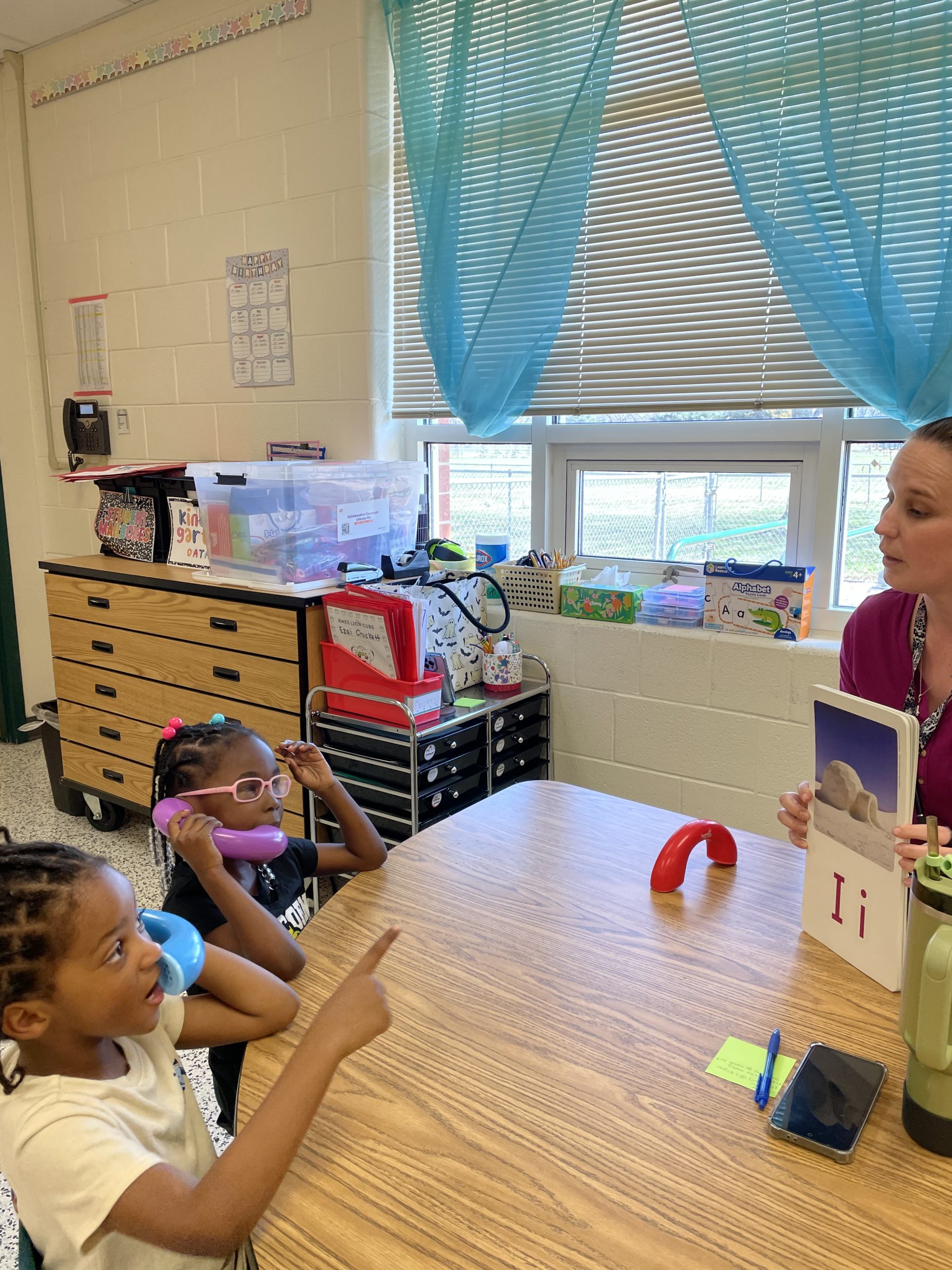
Literacy manipulatives are physical objects designed to help readers develop phonics skills. By providing a hands-on approach, these tools enable students to simultaneously see, hear, and feel the connection between sounds and letters.
For example, students use plastic phoneme phones to reduce outside noise and better hear themselves sound out letters and words.
Several John B. Dey kindergarten students sat at a table with assistant teacher Angie Jones. “The word is let,” she told them. They used the “l,” “e,” and “t” letter tiles and then sounded out the word while using the phones.
Casey Tinsley encouraged three of her students to sound out diagraphs, a pair of letters representing a single sound.
“What diagraph says ‘sh’?” she asked. “S-h,” they replied. Each took a turn reading a page from a book titled “Dash’s Big Dash,” which included words with the “s-h” sound, such as “rush” and “flash.” They used plastic “pointer fingers” to glide over each letter as they pronounced the sound.
Tinsley said some students begin the school year not knowing any letter sounds and by June are reading.
“They feel so empowered,” she said.
The school division’s vision is for all students to learn, grow and experience joy as they learn to read.
In alignment with Virginia’s focus on evidence-based reading, VBCPS uses the Virginia Language and Literacy Screening System (VALLSS) screener for all students in kindergarten through third grade. Provided by the University of Virginia’s Virginia Literacy Partnerships (VLP), this tool helps teachers identify students who may need extra support to become successful readers.
Kempsville Meadows principal Christa Markert said kindergarteners are learning at a different pace and are now better prepared for the next grade level.
“Kids all of a sudden want to come read you a book,” she said. “The pride of being able to read that entire book from cover to cover is amazing.”
Visit the VBSchools YouTube page to watch a video about kindergarten literacy.