



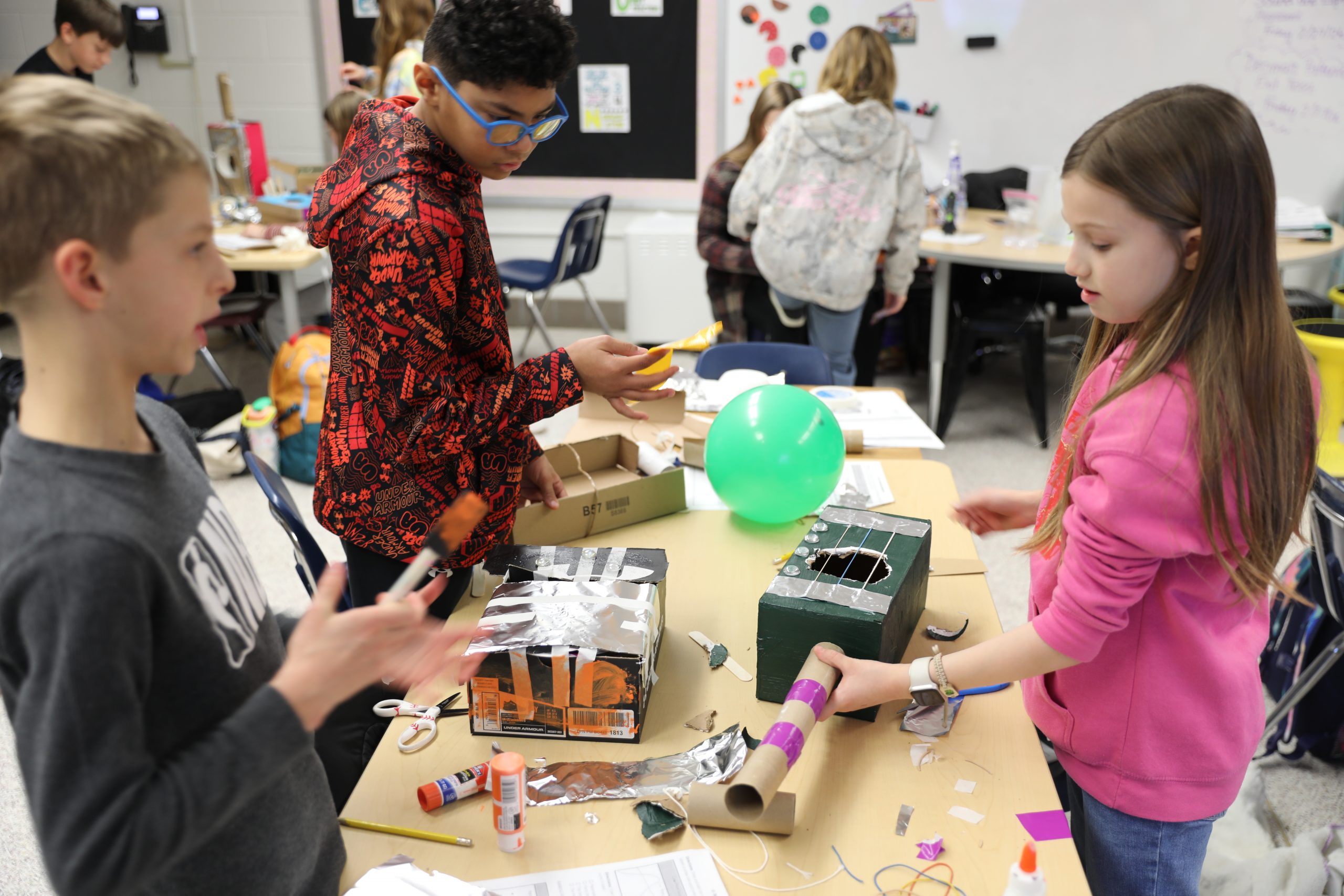
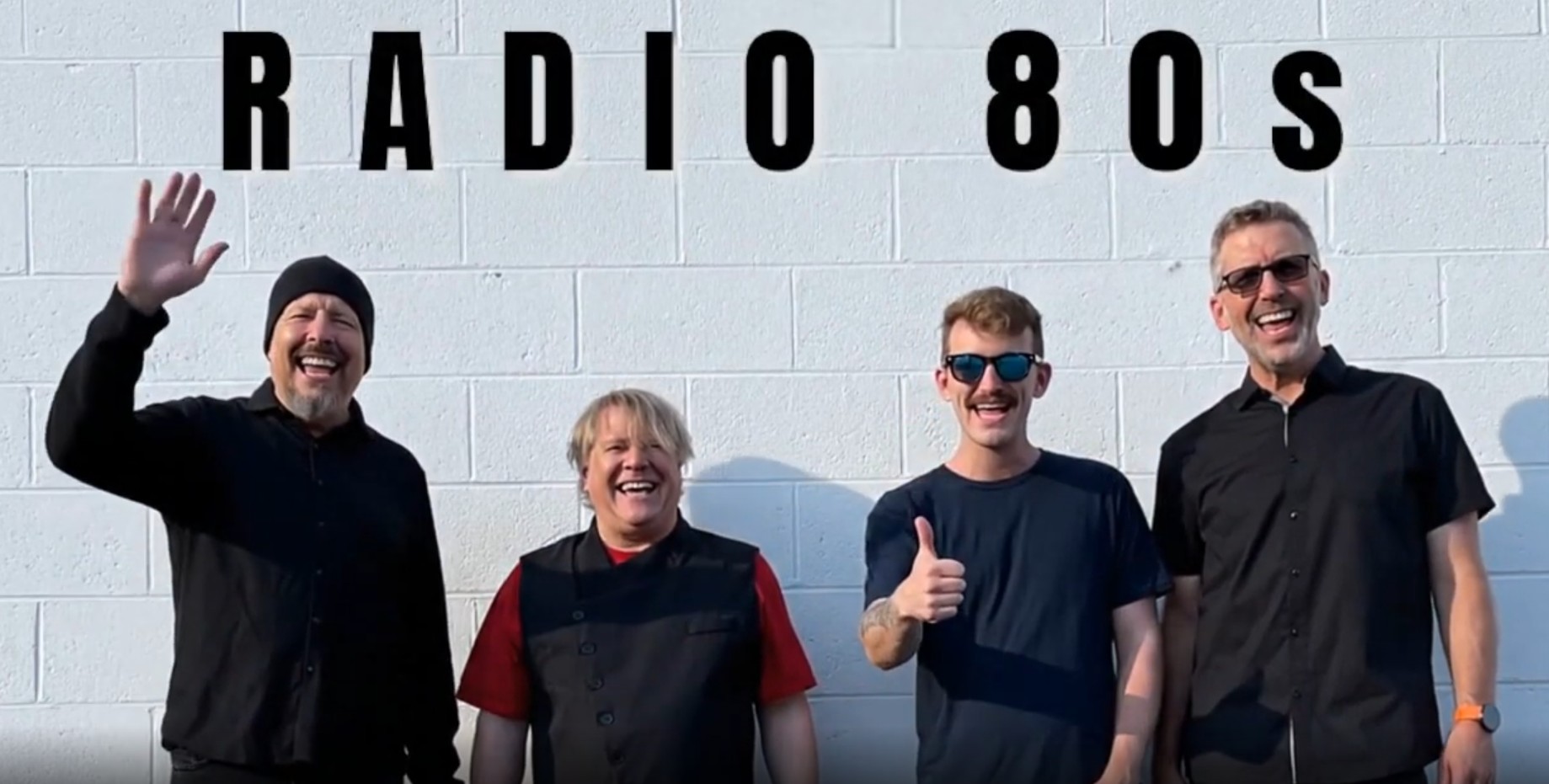
Fifth graders at Red Mill Elementary are learning about sound and light while designing instruments for the local band Radio 80s.
The band created a video introducing themselves and asking students to think about how light and sound play into a band’s performance on stage. (Watch the video on Google here.)
To connect real-world sound production with classroom learning, students interviewed lead vocalist Phil Friedman, who is also the school’s instructional technology specialist (ITS).
The lesson idea came from gifted resource teacher Cynthia Housianitis, who shared with Friedman a concept she previously developed with the fifth grade team and the former ITS, using music as the heart of the students’ performance task.
The performance-based assessment (PBA) encourages students to think like real engineers, Housianitis said.
“They’re using critical thinking to solve problems musicians face on stage and creative thinking to design instruments that produce sound while interacting with light,” she said. “Partnering with Radio 80s makes the science meaningful because students can see how these ideas apply in the real world as they design, test, and improve their prototypes using scientific evidence.”
“We asked students to design instruments for Radio 80s to use during a performance, incorporating a lighting element so their creations truly shine — even in a dark stage environment,” Friedman said. “It’s a great way to bring the curriculum to life.”
Throughout the unit plan, students designed and refined prototypes as they learned about the science behind sound production, vibration, energy transfer, and how light is reflected and refracted.
The lessons unfolded over several weeks, with students working through several pages of worksheets while problem solving challenges about light and sound that musicians may face on stage.
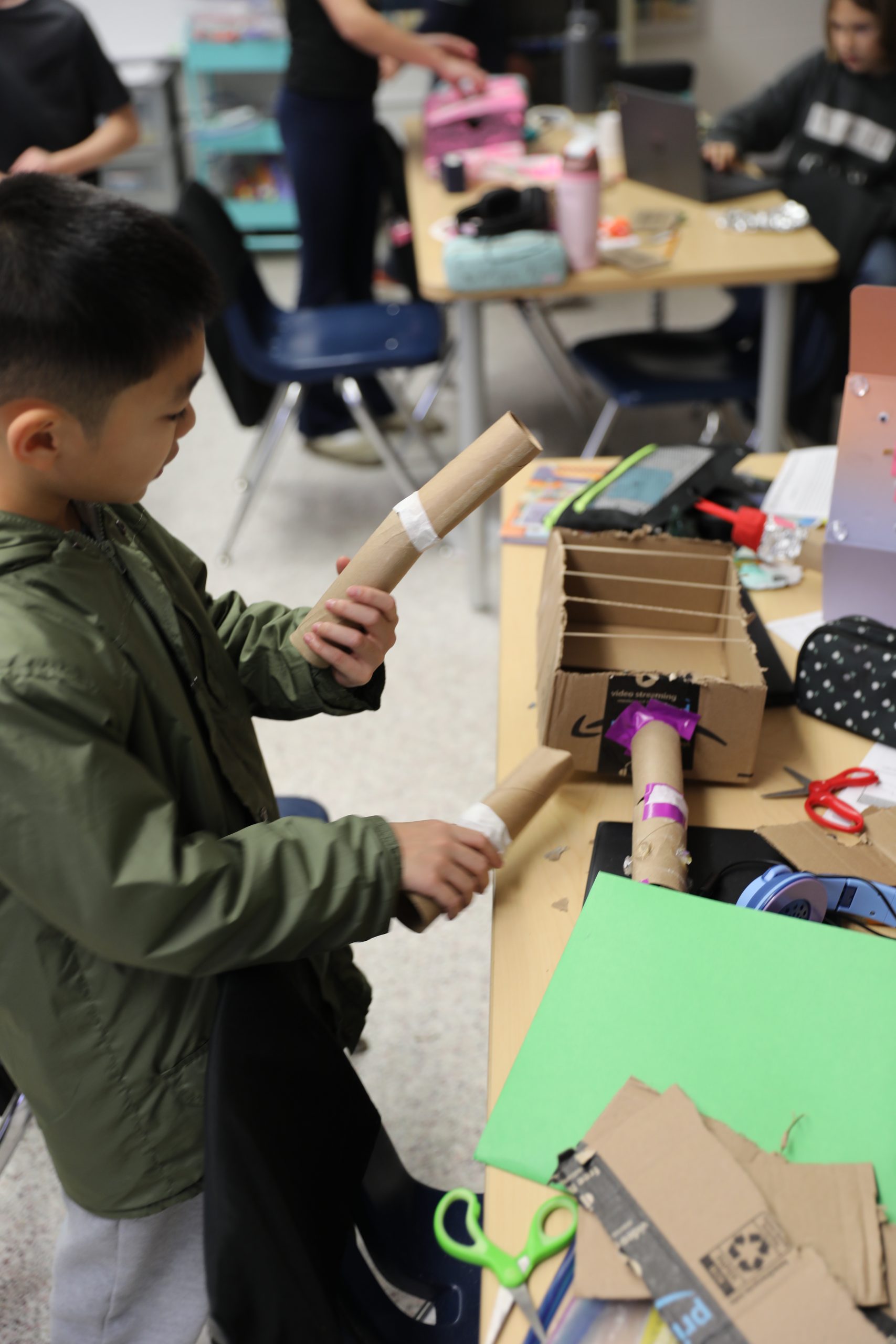
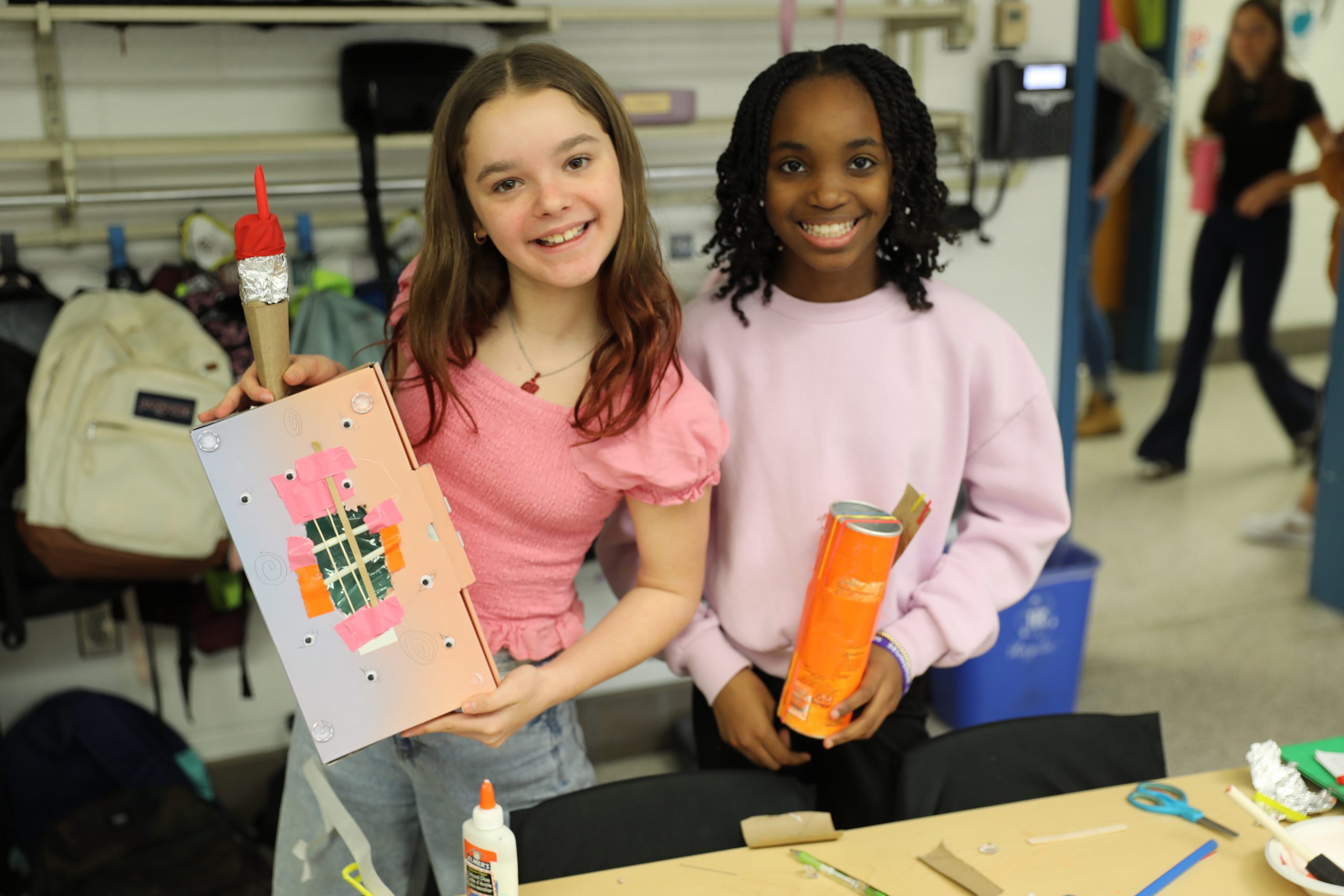
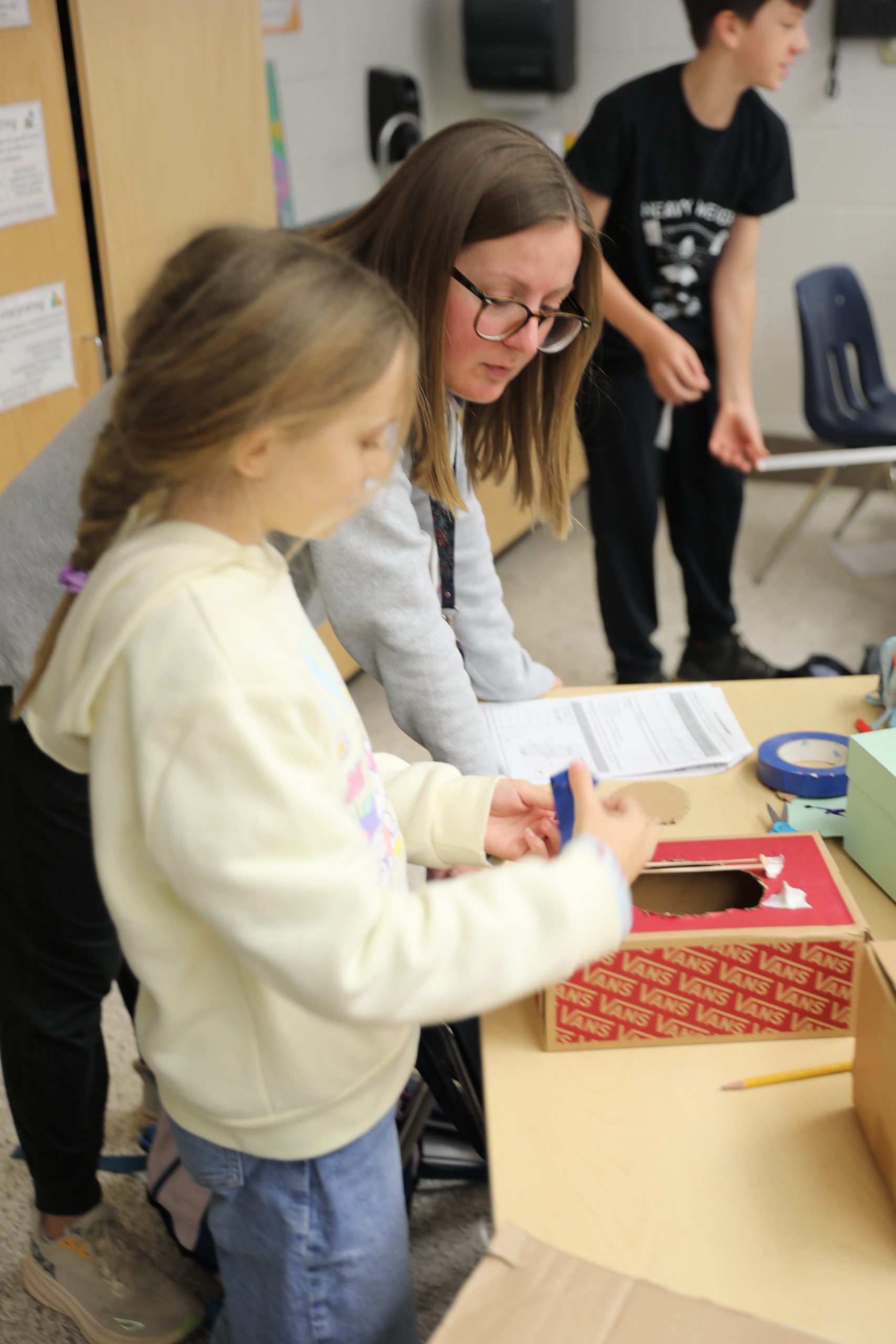
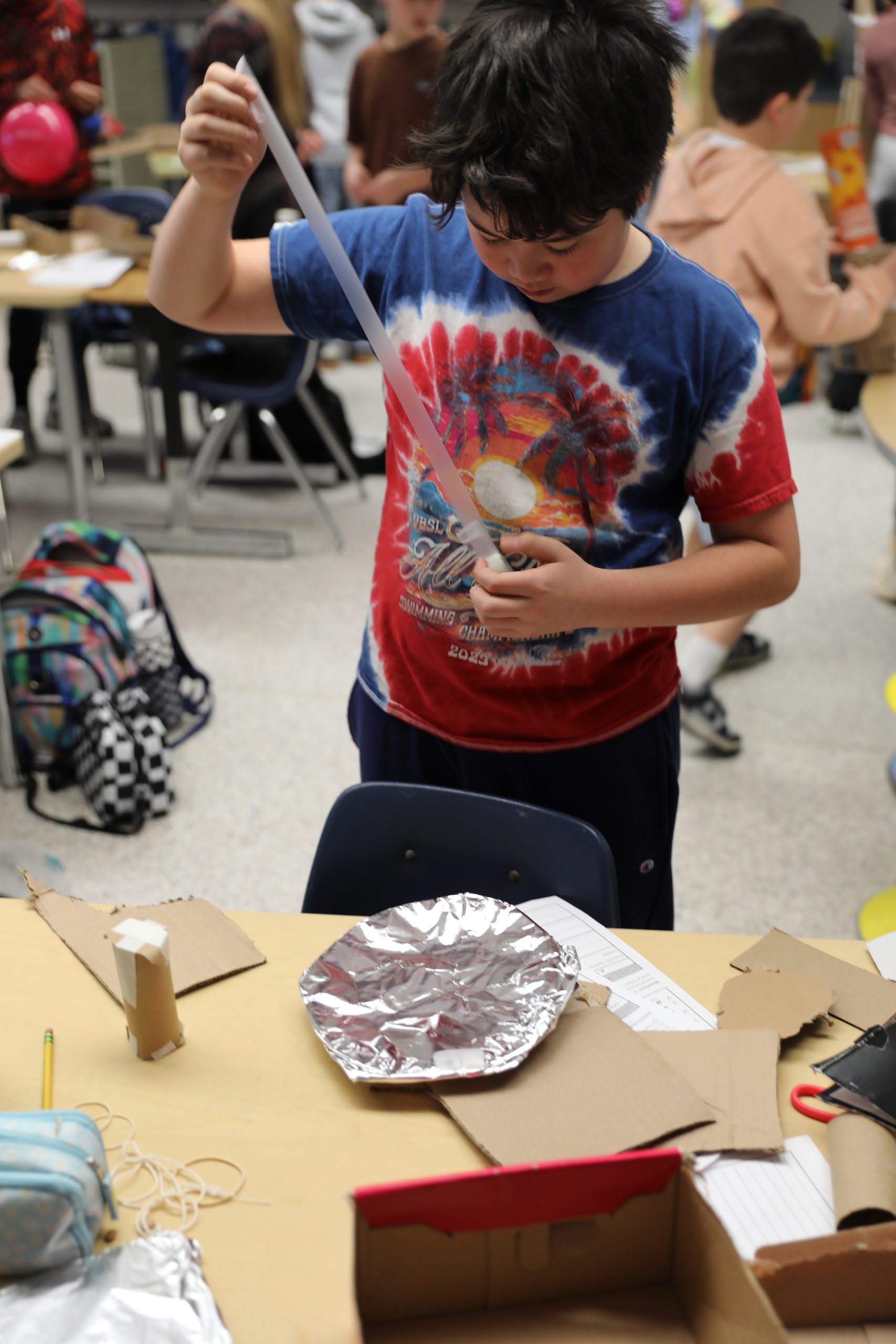
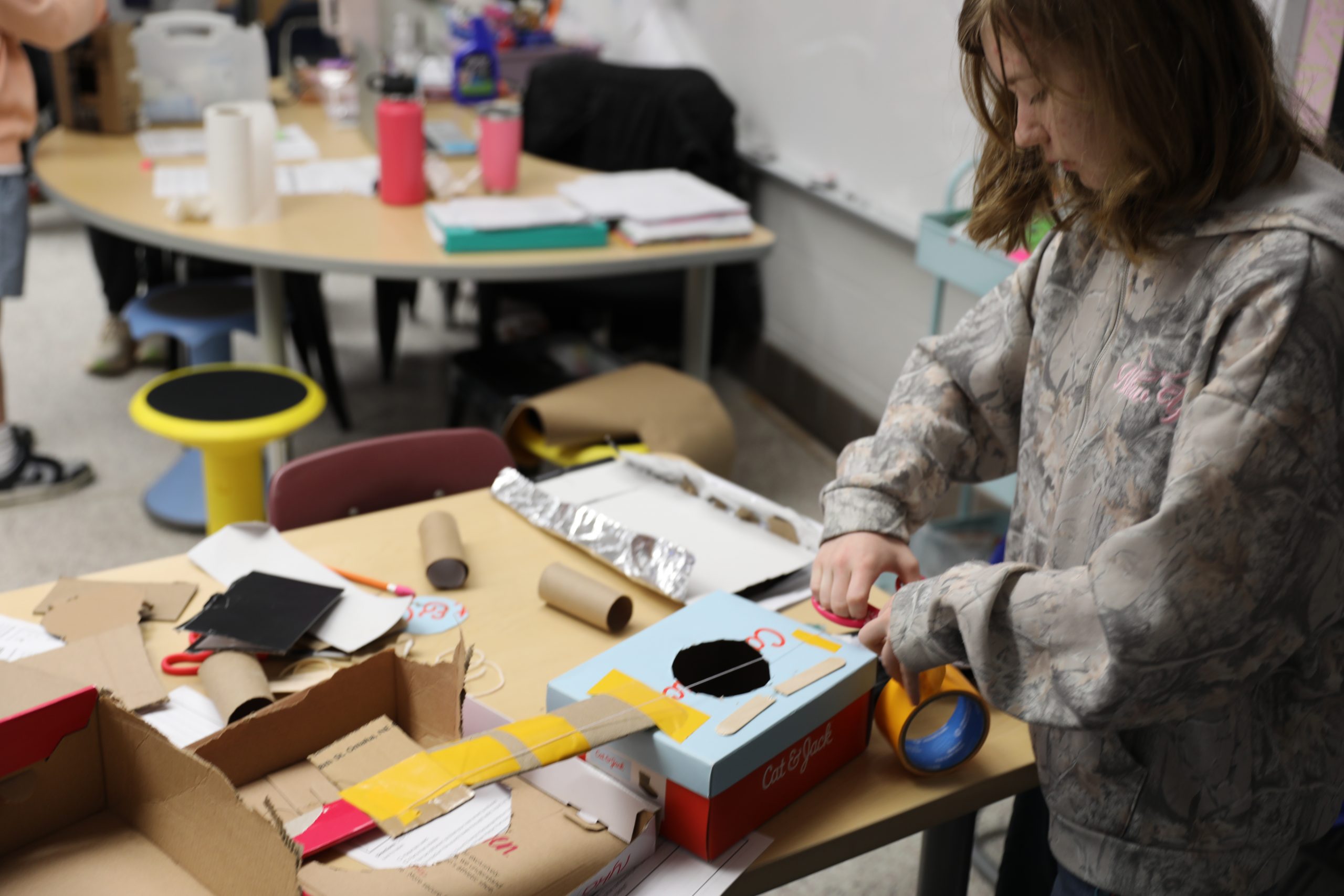
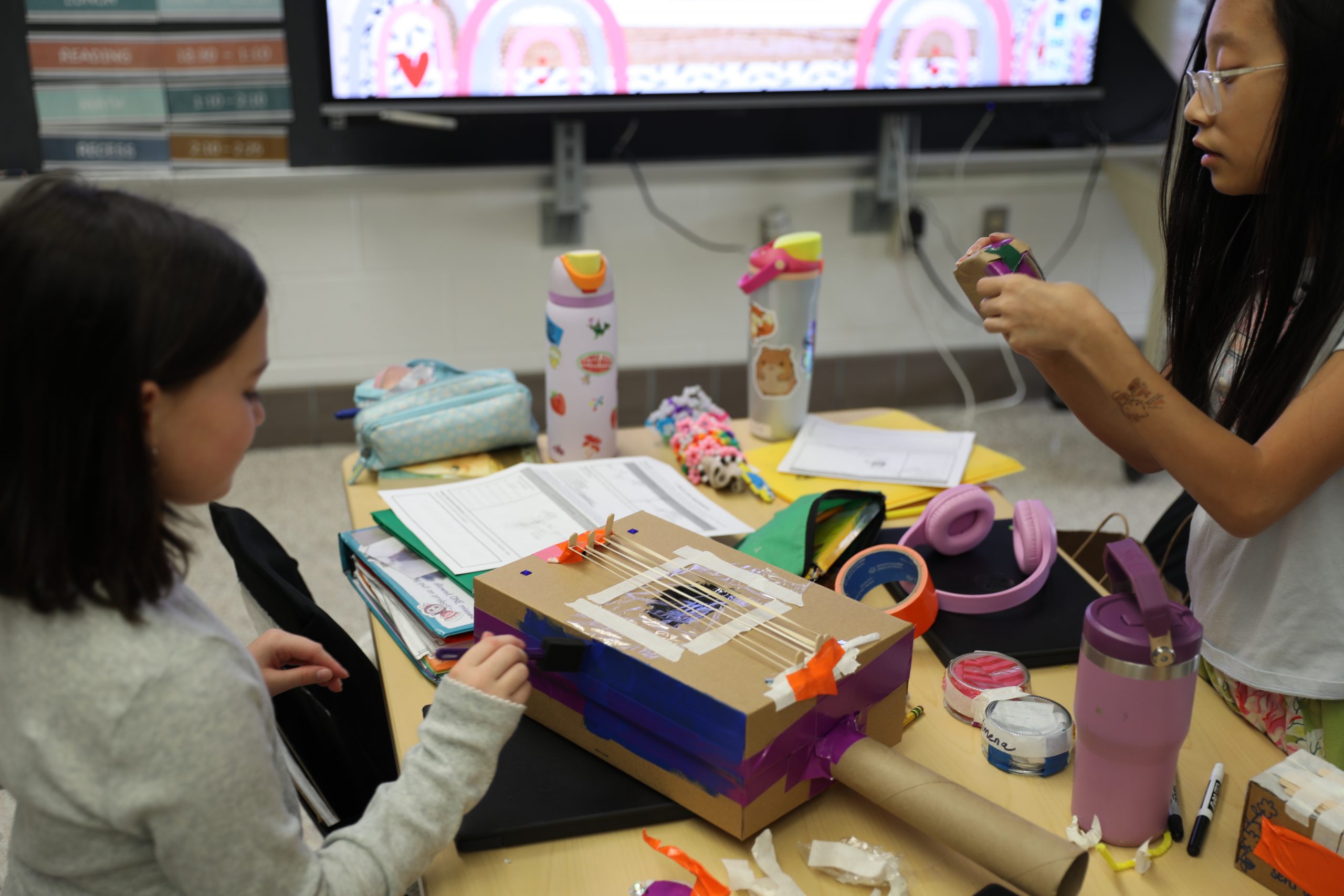
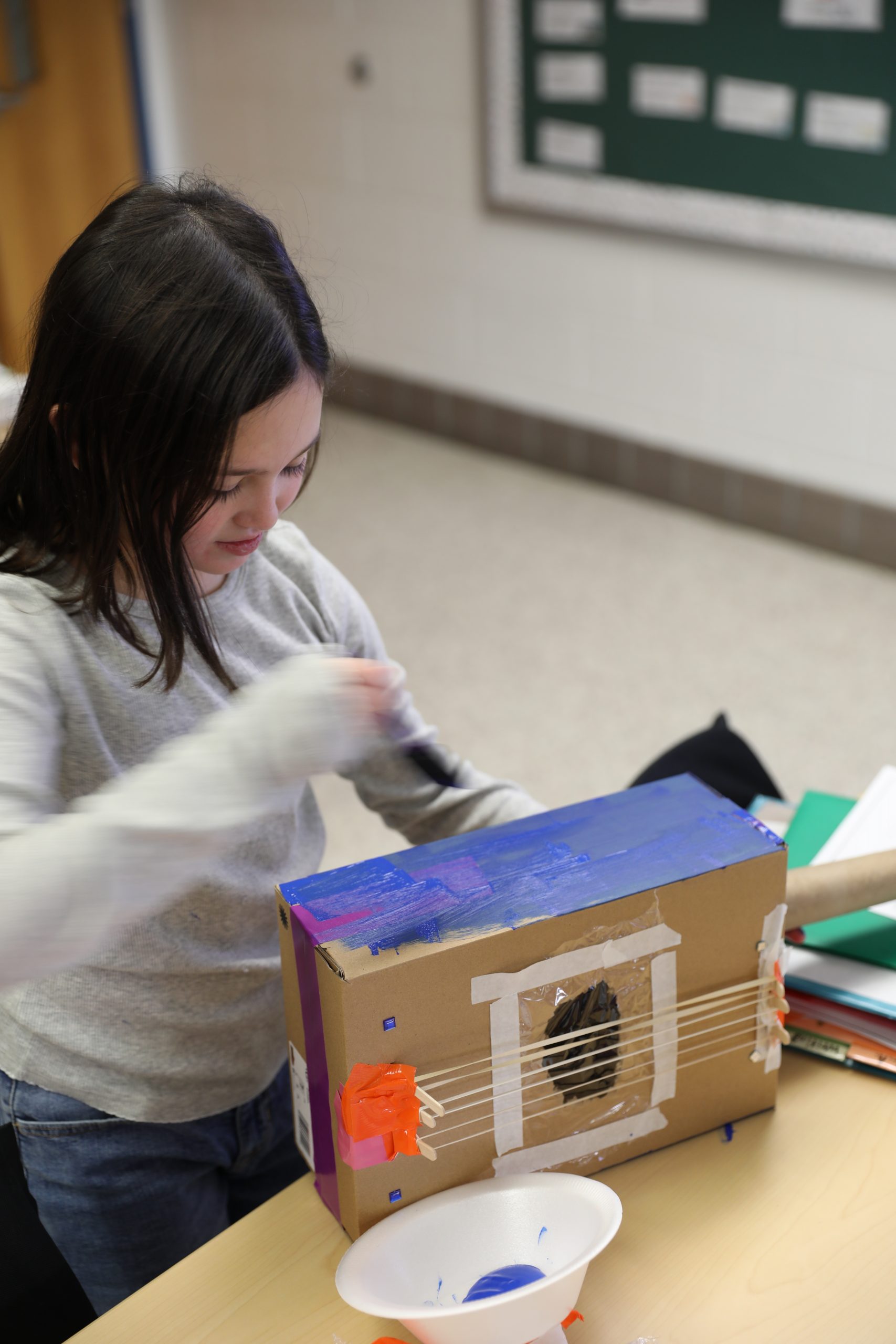
On instrument-building day, students used a variety of materials. There were shoeboxes, Amazon boxes, toilet paper rolls and recycled plastic containers from home. There were also strings, rubber bands, balloons and various materials that refract, reflect or absorb light waves – aluminum foil, sequins and plastic crystals.
“The clock is ticking,” Mrs. Losito said during the exercise. “We have an hour. Your first goal is to build an instrument that makes sound.”
As students asked for help, Losito and substitute teacher Wylie Chappell encouraged them to focus and see if they could come up with their own solutions.
“I want you to lean into the productive struggle, and learn how you can do that,” Chappell said.
Losito reminded students that the challenge was to make each instrument have at least two different sounds.
“OK, that looks like it will make one sound,” she said to a student, “but how will it make a different pitch?”
Hazel Verbout used string and rubber bands to make two different sounds, and she and classmate Jacob Kepka described how different decorations on their instrument were opaque, transparent or translucent.
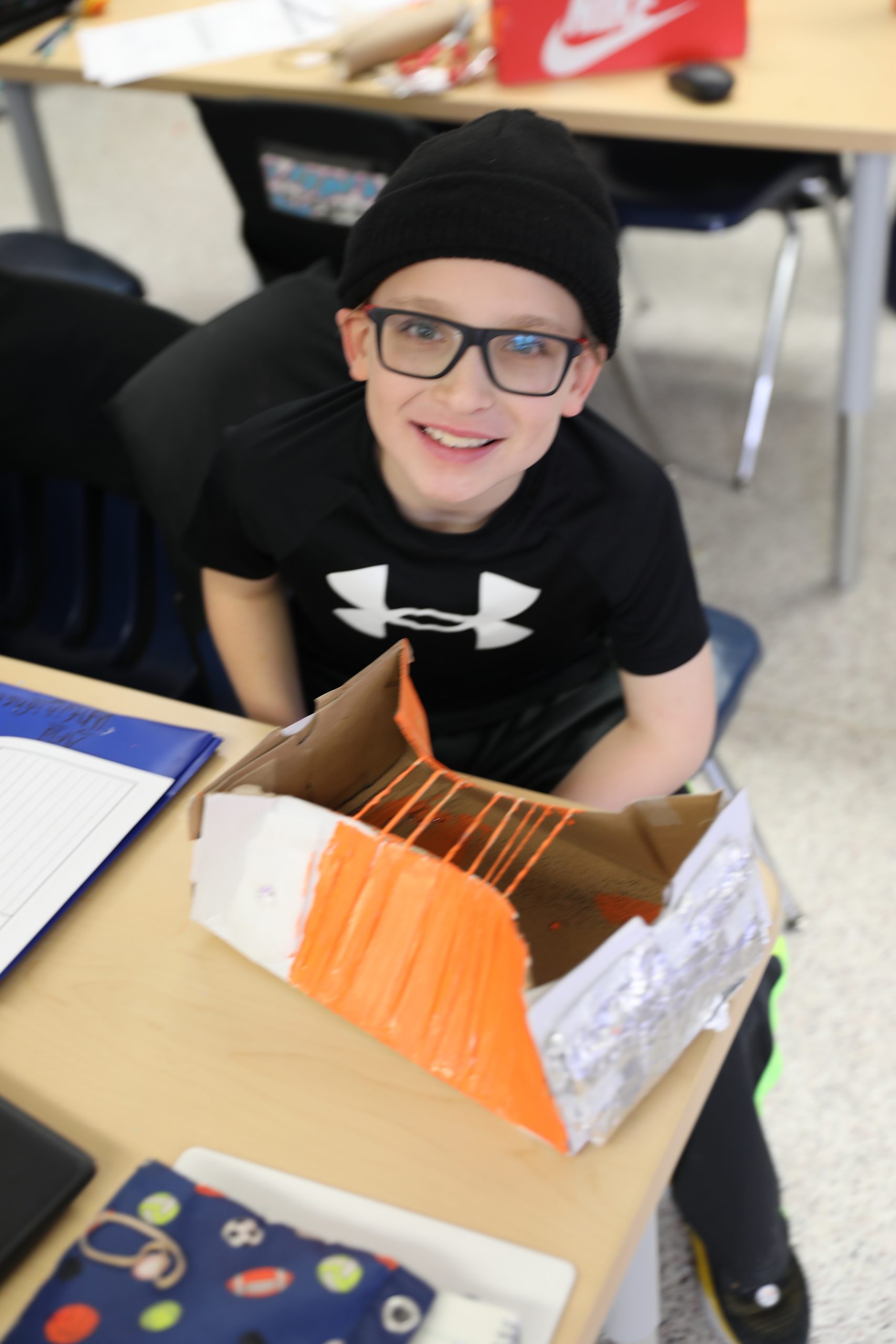
Across the hallway is Jessica Gerling’s class, Levi Hill explained how his instrument refracts and reflects light, while Luke Beatty described how the different rubber bands on his instrument make different sounds.
As part of the overall unit, students also recorded a video pitch to Friedman, explaining how their instrument achieved the assignment’s goals and was good enough for Friedman’s band to use. Teachers used an oscilloscope to measure whether the instruments were successfully built to make two different sounds.
“I like that this is hands-on learning,” Losito said. “Students are learning, making something and seeing how it applies to the real world.”
The project has also benefited Radio 80s, Friedman said.
“Collectively, I feel that we all are happy to have the ability to build a bridge with a younger generation by sharing something we have great passion for,” he said. “Personally, it is incredible to bring a passion from my private life and have it incorporated into to my work life.”
I love this concept of collaboration and imagination!
Great job guys, keep those little minds growing!